VISION STUDIO FACILITATION

For this project I lead a hybrid remote and in-person workshop to establish a cross functional consensus of the team’s vision and mission. Lack of direction in product teams was costly for this startup. Taking a step back to remember the why allowed for clarification of success metrics and greater efficiency within product teams.
THE CHALLENGE
The design team was experiencing challenges due to limited vision, lack of data, and miscommunication of objectives. This led to a misunderstanding of their scope and varying metrics to indicate success. A lack of vision and ambiguity around the mission limited progress and negatively impacted their day to day processes.
A vision statement helps to define the “why” while the mission statement explains how a vision is achieved. A clear vision and mission statement help to solidify success metrics.
TOOLS USED
Miro, Google Forms, Webex
PROCESS

VISION STUDIO ACTIVITIES
🔎 CLARIFY THE PROBLEM
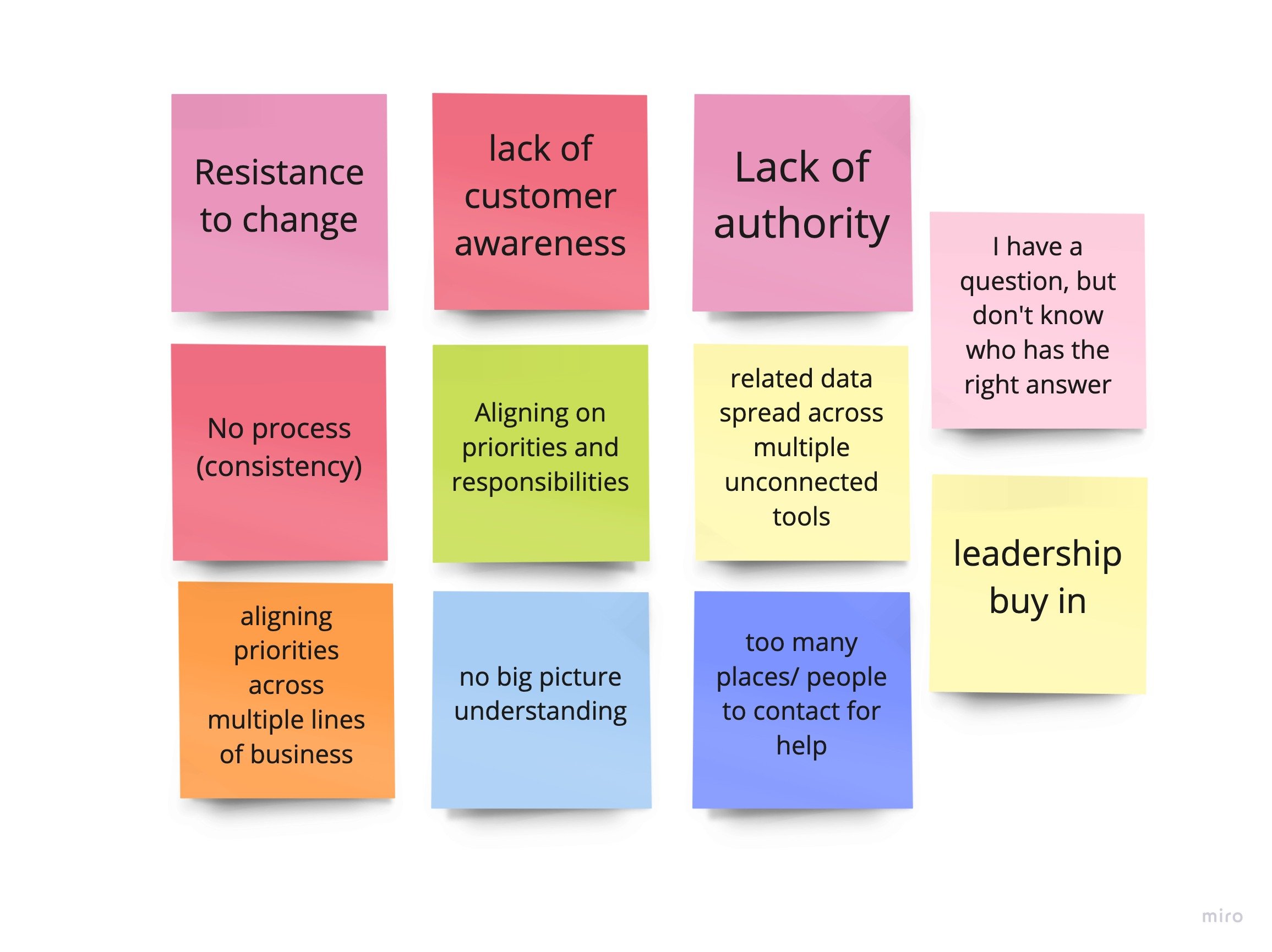
To define a vision and mission we first need to clarify the problem. Using Miro team members were able to speak to their pain-points and concerns anonymously. Dot voting was utilized to visualize the most common challenges and brought clarity to kinks in workflows.
The main pain-points were not having processes in place, misalignment on priorities, and lack of overall vision. The team identified the most important outcomes at the start of the workshop.
💡 WORKFLOW DISCOVERY
The team diverged to illustrate the ideal flow of their daily activities. When the team converged they found a clear differences of focus while also exposing an aligned vision. Though there were clear differences in ideal workflows, there was a clear unified vision that established a foundation for identifying key success metrics.
🧠 BRAINSTORMING
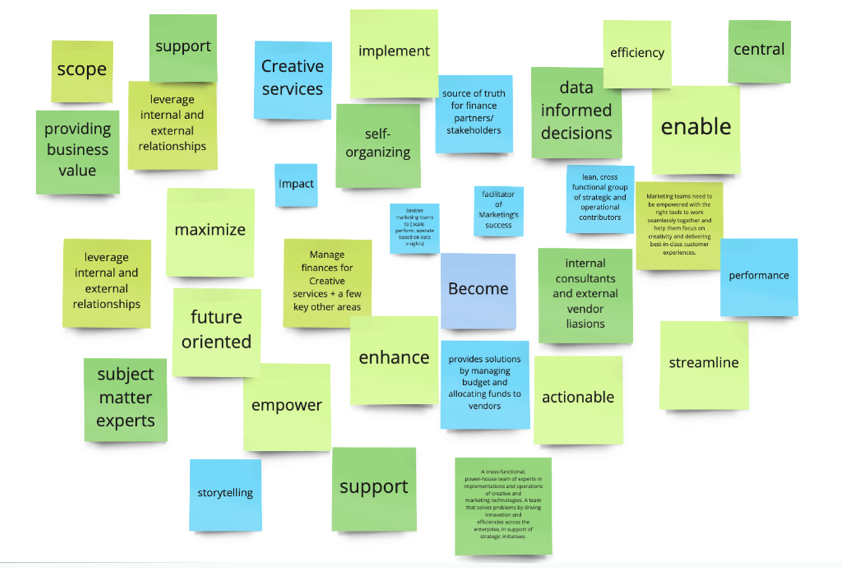
Using Miro and Webex, the team was able to collaborate and define their role in their own language. This also illuminated team strengths and weaknesses. This workshop activity brought structure to the vision and mission of the team while also clarifying needs from a cross-functional perspective.
After extracting the most impactful points created by the team, the mission statement and vision were created.
📝 CRAFTING THE MISSION AND VISION
The team was able to begin crafting their mission and vision statements utilizing language they generated through each workshop activity. Taking the data they produced I was able to clarify statements, iterate, and receive their feedback in the form of a survey.
After a review the findings were utilized to begin defining success metrics.
📏 ESTABLISHING SUCCESS METRICS
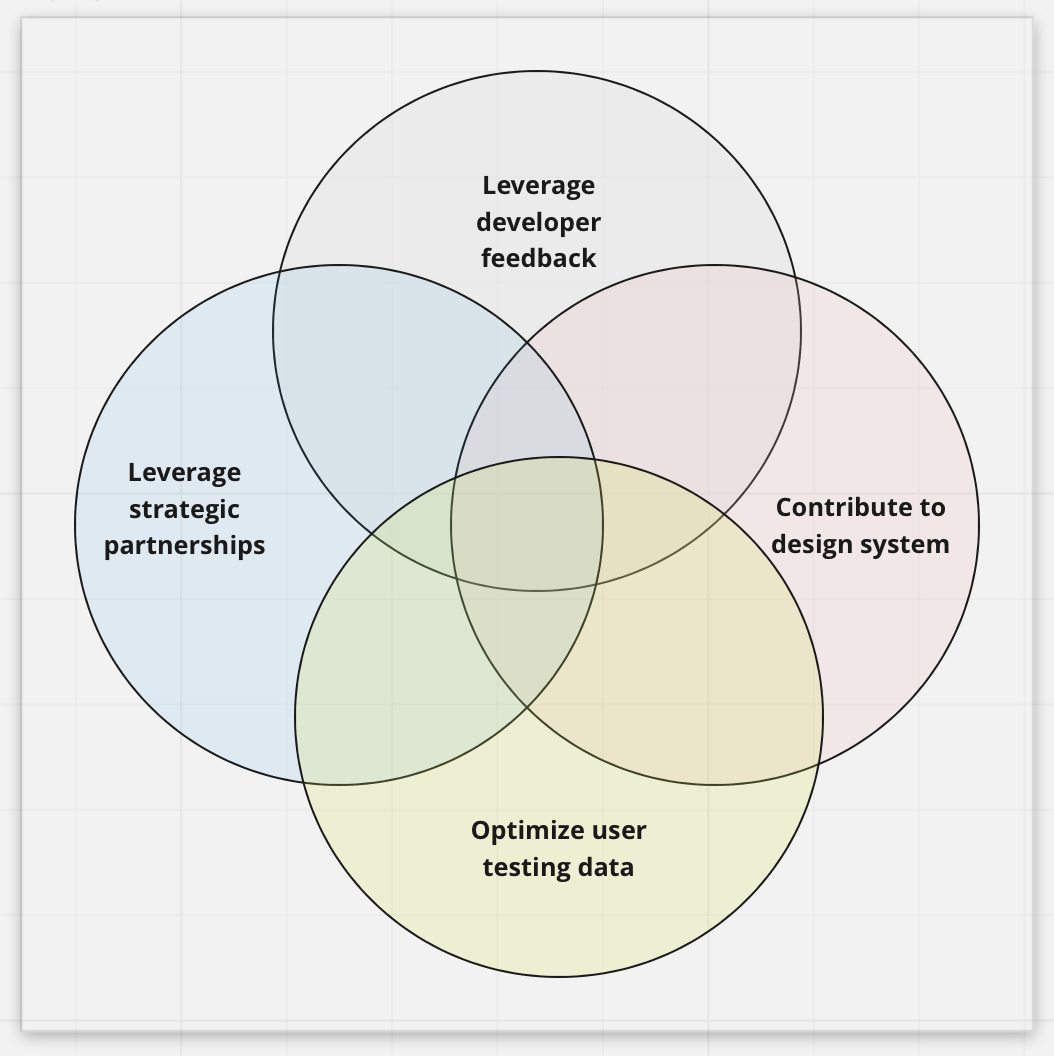
Metrics should reinforce behaviors and processes such as how fast a feature is launched or how quickly lessons from user testing can be successfully integrated into future product updates. Pillars are used to establish systems for categorizing data from metrics.
Some metrics that fell under the pillars were:
decreased number of support tickets
improved user satisfaction in player capabilities
increase in customer satisfaction score
cost savings through automation
OUTCOME
Through a series of workshop activities including an icebreaker, vision canvas, design vision, vision statements, illustrated story boards, the team was able to see patterns that began to mould the team identity. This helped to clarifiy the scope of each team members role and establish success metrics.
Upon completion, the vision and mission statement were added to documentation at key touch points with references to artifacts that help the team to measure success.