CENTRALIZING CONTENT METADATA
For this project I lead research and design of an enterprise product that enables designers, marketers, authorship teams - anyone who needs to reuse content across channels-to find the right content with ease.
THE CHALLENGE
Content metadata, or data about data, is living in disparate places within the content ecosystem which detracts from visibility and prohibits reusability and interoperability . It’s essentially what allows a user to search for content. As a result, designers spend an absurd amount of time creating repetitive, visually similar content , fiscal week after fiscal week. For the business, this means that the true value is not gained from investments made into manual content production. There is no visibility into asset performance due to the multiple “hacks” that content creators use just to get a piece of content designed and published. It’s a problem that compounds everyday in a living, breathing content ecosystem.
Business goal: Enable full visibility to usage and performance of assets, prohibit costly and redundant content creation
User goal: Enable reusability and visibility of content and atomic assets across channels, authors and audiences.
RESEARCH & IDEATION
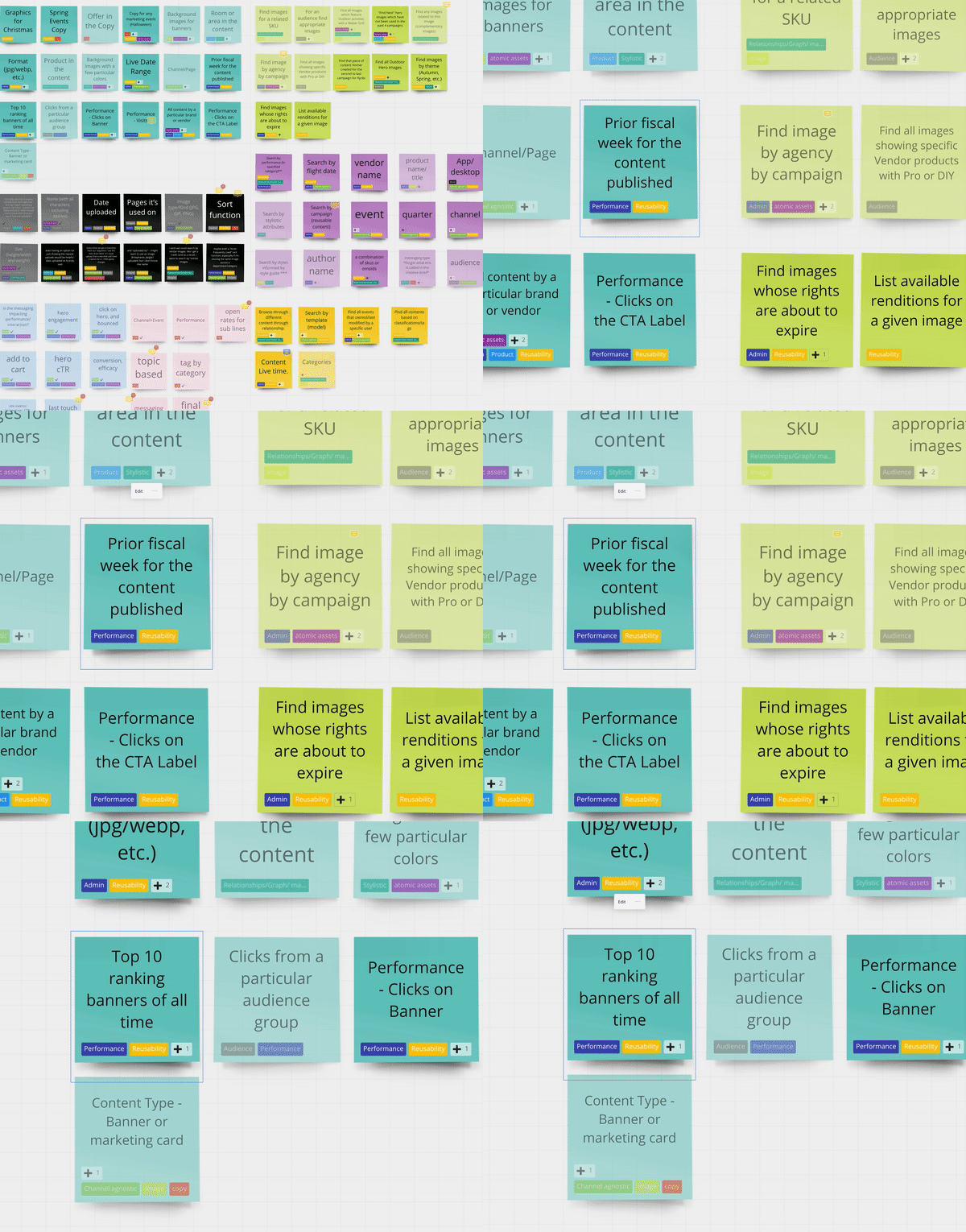
After a period of research and interviews to completely capture the problems from a user lens throughout the entire content creation workflow, our validated assumptions led to the concrete understanding that the search capability is where metadata meets the user in a tactical sense. Features that enable users to Leverage metadata include but are not limited to are advanced search capabilities, sort capabilities, recommender capabilities and keyword searches in the CMS. However- it was decided that a knowledge graph would be the basis of this. Knowledge Graphs are data structures that connect entities or instances with other entities and instances through relationships.
Through design workshops, I gathered possible queries from roles across the content creation journey by simply asking “What do you want to know about content and assets?” Patterns were visible, indicating relationships between queries. This was the basis to form the initial metadata attributes to use that would prove this concept.
Provided expertise: User research | Service design | UX strategy | UX design
OUTPUTS
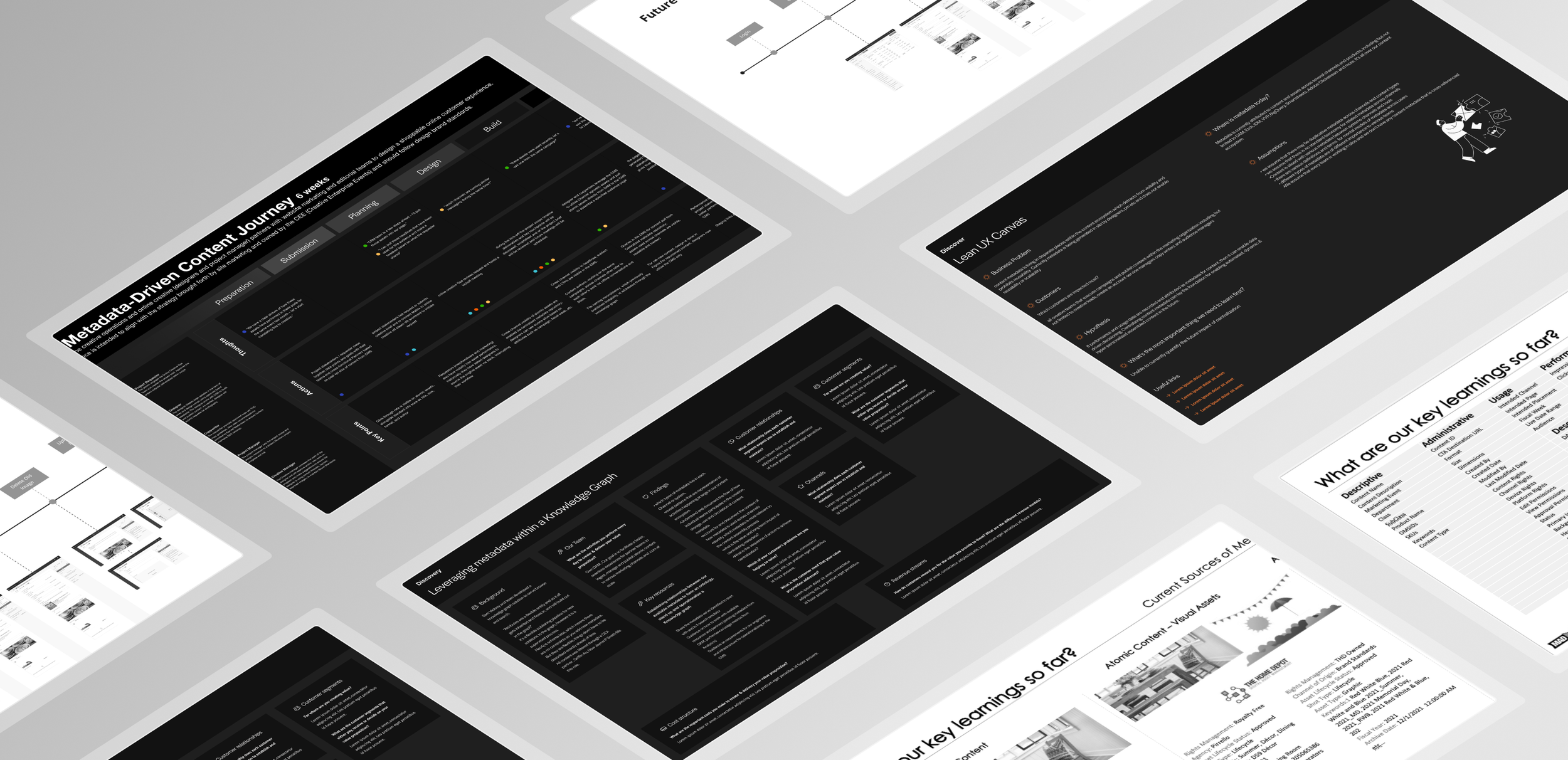
Through the course of over 20+ interviews, my synthesis converged to create multiple artifacts that distilled the content creation journey to stakeholders, as well as artifacts to support designers across interdependent products. Sensitive content is redacted.
The search capabilities designed into the CMS were the result of our team’s research, and all metadata included for the POC was manually recorded and aggregated from over 100 sources of metadata.
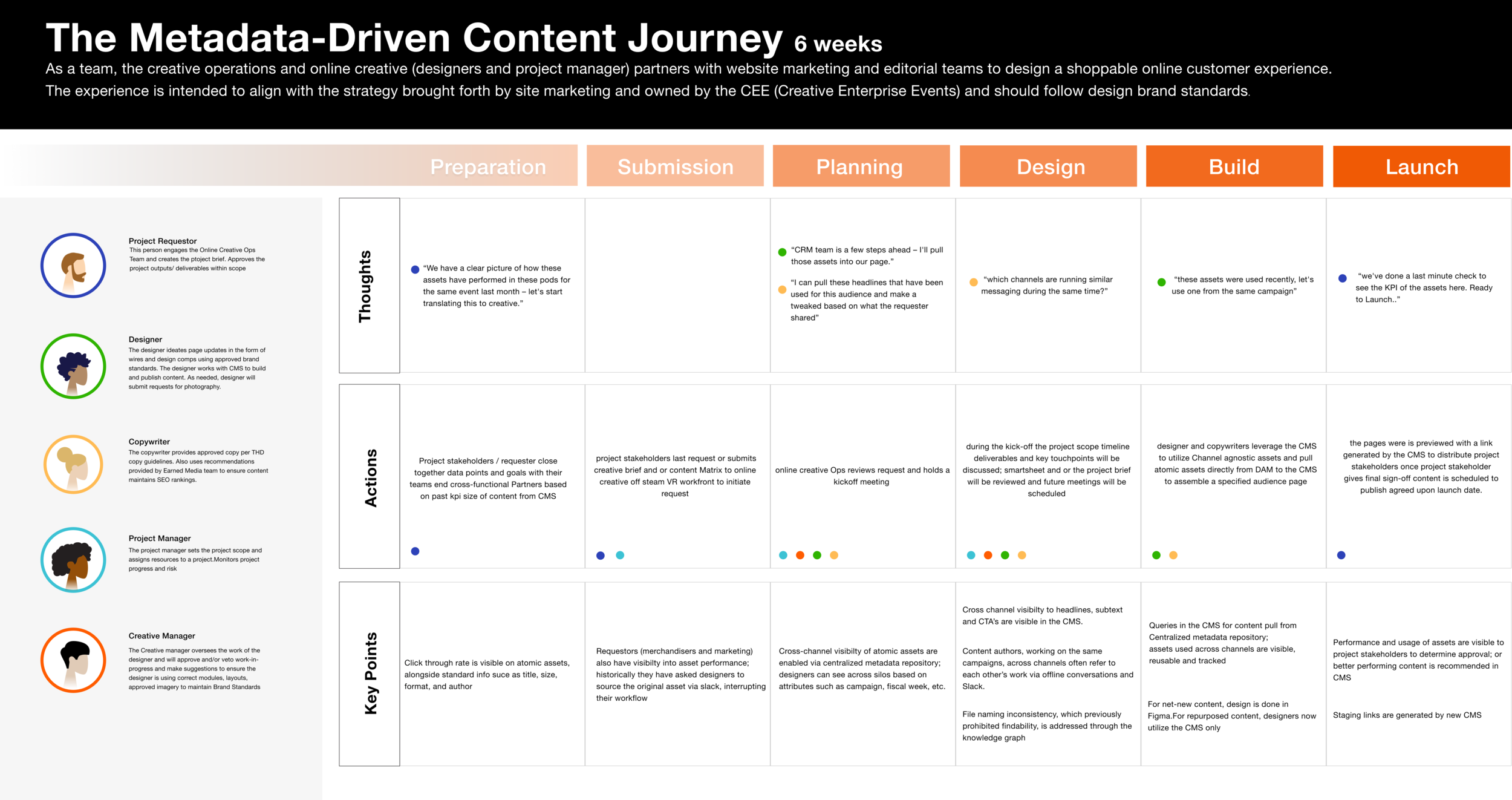
sensitive content and proprietary info is redacted